

the xenonite plot armor of project hail mary
Hail Mary was a badly mismanaged, rushed death trap driven by groupthink and politics, and Ryland Grace was right to balk at the idea.

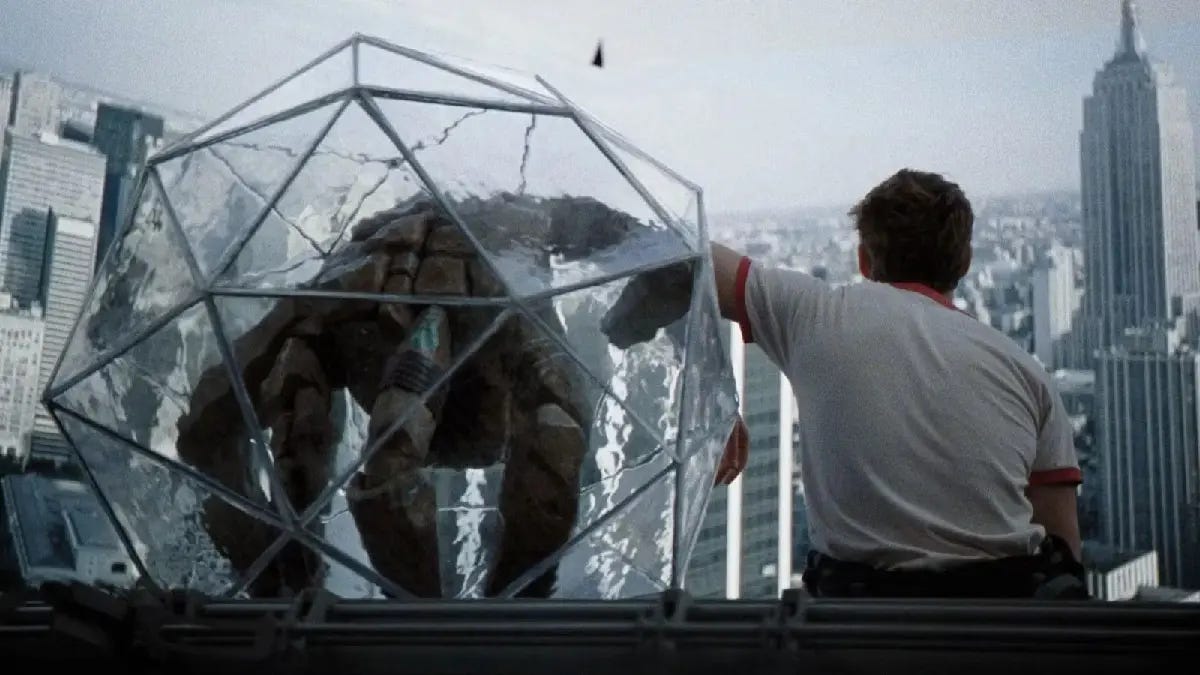
Okay, before we begin, let me be very, very clear that I’m not going to be writing out a critique of the book or the movie adaptation. I think that the book was solid, and while some things got skipped or accelerated in the movie so it wouldn’t be five hours long, the way it manages to portray the friendship between Grace and Rocky as they tried to save their respective worlds was amaze amaze amaze.
So, again, just to be clear, I think it’s not just perfectly fine for science fiction not to be a totally, 100% accurate reflection of peer reviewed scientific work, but it’s actually a very necessary part of the genre unless the whole point of the work is using science as a critical part of world building or to help drive character motivations. I’m not going to pontificate on the possibility of the star-devouring astrophages and how likely the Eridani rock people are to exist. I’m willing to just accept them as is.
My gripe is not with the story, but the logic of the mission itself, and since the book is written in first person from the perspective of Dr. Grace, he’s hereby exonerated. No, my ire is reserved for Eva Stratt and world governments that took a genuinely decent idea and turned it into a mission virtually designed to spectacularly fail, dooming all of humanity to extinction over the course of a few centuries.
Obviously, from this point on, heavy spoilers will follow, so you’ve been warned. If you already know the story — or don’t, but don’t care to know it and are simply curious — read on. If you saw all the ads and are waiting to read or watch, maybe bookmark this and come back when you do. With that out of the way, let’s begin.
From a narrative standpoint, I think it really works to find out that Ryland Grace is, in his words, just a coward who was dragged kicking and screaming into the spaceship that was intended to save the world from a Sun-eating alien plague, and now here he was, risking his life for Earth and his new alien friend. It’s a powerful inflection point in the story and it really shows his unintentional growth. Despite saying that he doesn’t have it in him to rise to the challenge, when pushed into it, he did, and then some.
But from a practical standpoint, he was kidnapped, drugged, and stuffed into a death trap that was hurled almost a dozen light years away from his home. What is the first thing he discovers when he’s woken up a week away from Tau Ceti? Two desiccated corpses of his fellow crew members. The movie leaves their deaths a bit of a mystery to the viewer, but the book is crystal clear.
The mission relies on putting the crew in suspended animation so they wouldn’t need nearly as much food, water, or oxygen. Because that’s not a thing, Stratt contracts an oncology startup working on a machine to keep patients in an induced coma through aggressive chemotherapy. Induced comas are extremely dangerous, and at that time, the company is still experimenting on primates with pretty disastrous results.
In the rare cases the technology did work, amnesia, muscle atrophy, and a whole host of other neurological and gastrointestinal problems were typical, with the implication that the damage done to the patient’s system wasn’t even fully known yet, and could end up shaving years off their lives. At least it’s not cancer, says the company, and Statt isn’t worried because hey, the crew is gonna die anyway. That’s the plan.
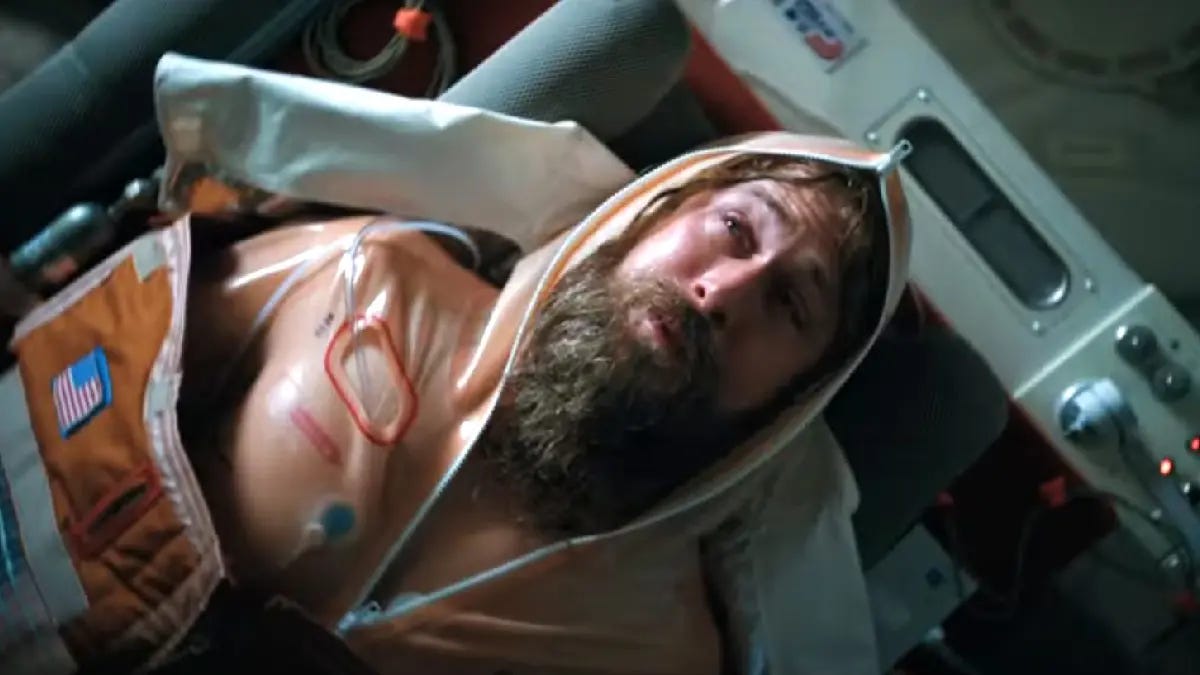
No, really. After finishing their mission and hopefully finding some answers to taming the nasty star-dimming, world-killing astrophages, the crew was supposed to commit suicide by their preferred method, and then leave everything up to four robots which would — also hopefully — make it back to Earth in one piece with the solution. In this light, Ilyukhina’s and Yao’s deaths weren’t unfortunate accidents or weird flukes, but near certainties. Hail Mary? More like Heaven’s Gate: The Spaceship.
It’s actually an incredible stroke of luck Grace survived the trip and the craft wasn’t just a floating tomb for poor Rocky to explore and become even more depressed. And it’s doubly amazing that he wasn’t reduced to little more than a drooling, slack-jawed, incontinent puddle in a corner, which would’ve made the efforts to find and breed the taumeba a lot more difficult, but was also a likely outcome of his sedation.
So, just to reiterate. The mission to save the planet, maybe, was to build a ship for a one way trip towards an alien solar system with a computer that would have to deal with every single problem, course correction, impact, or unknown obstacle by itself until it was arriving into the system, wake up humans hooked up to a device more or less certain to kill or incapacitate them, find something, send it via four more robots who’d also have to navigate the stars on their own, and kill the mission’s survivors. If any of this went wrong in any way whatsoever… Earth freezes into oblivion.
Why does the mission have to wait for a better or more survivable design? Because hundreds of millions may die. Why can’t it be made safer for the crew? Because the mission is dangerous by definition. Why couldn’t humans supervise the computers heading into unknown? No room for extra supplies and no time to wait. If any of the shortcuts taken for the project go awry, the whole thing is kaput and billions will die. But no, let’s take all the deadly shortcuts because time, and projections, and it’s not supposed to be safe.
No wonder Grace’s first reaction to this absurd mission plan was “anyone have any other ideas?” That’s just a sane thing to ask at that point. Why wouldn’t you want a human on standby to make sure the flight goes smoothly? Why wouldn’t probes be backups in case the humans die, and if anything happened to the probes, there’s a crew on standby with all the knowledge and answers? If humanity dies should Hail Mary fail, why do some worst case projections overrule the need for extra effort to help it succeed and reduce the immense risk and uncertainty?
If Grace died en route, if he didn’t have Rocky’s absolutely crucial help, if he didn’t find the taumeba, if there was no taumeba, if his experiments to breed a nitrogen resistant strain failed, if Hail Mary hit some stray interstellar comet at 99% of light speed, if none of the probes made it back home, or crashed on arrival, if any of the many things pretty much guaranteed to go wrong did, with no one around to fix them or make a new plan, what would’ve happened?
That’s right, whatever was left of Earth’s governments would either be at war over what meager resources were left, or have to actually go back to the mission’s initial design and redo everything. A much larger ship. Awake and alert crew. Dust shields mounted in orbit. Ten million kilograms of astrophage, plus the hardware to breed a lot more just in case. Six years worth of supplies and two hydroponic chambers with bioreactors as primary food sources after the first six months.
They’d have to get it right the second time because the stakes are now far higher and they’ve spent the last 30 years waiting on an improvised, badly designed mission to phone home and watching over a billion people starve. Or, they’d realize the error of their ways and a few years after Hail Mary arrived at Tau Ceti, a second, much better equipped mission would enter the system looking for it.
People crack under pressure in different ways. They don’t always freak out or become completely paralyzed by indecision. Sometimes, they act in ways that seem like cold, calm, ruthless competence, but in reality, it’s panic, rushed decisions, and falling into groupthink because they’re too terrified to choose, so someone else doing it for them feels like a psychic relief. This is why no one stopped Stratt on her path to launch an improvised, half-baked interstellar spacecraft as quickly as possible.
If anything, you can argue that the Eridians’ plan was theoretically much better. They had a crew of 23 who were fully awake, well provisioned, equipped for two way travel with extra fuel and supplies, and was clearly sent to make sure the job was done, and done right. It’s just unfortunate they didn’t understand radiation because of their thick atmosphere and lack of sufficient scientific inquiry in that direction, or have their own theory of relativity, lacking vision and unable to notice the same phenomena we did.
It’s little wonder that Grace felt welcome among the Eridani, who actually respected his life, nursed him back to health, and gave him meaningful work to do while he lives among them. He would’ve been a celebrity and a hero on Earth if he ever went back, but he was also a hero and celebrity on Erid.
And none of the Eridians ever drugged him, then sent him to basically certain death in an alien solar system because deadlines and projections said so, a fact that would’ve surely been swept under the rug back home as soon as he landed. I’d be pretty loath to leave in his place too, even if the higher gravity wreaked havoc on my joints.
This is what Project Hail Mary captured so well, intentionally or not. In a crisis, given the kind of culture and leadership we have now, populations would be seen as worth protecting, but individual humans with any useful skills become either expendable or disposable, the timelines preferable to bureaucrats and politicians will dominate any discussion, and hitting KPIs on time will still matter more than doing it right, or giving the actual logistics and science proper consideration.
Stratt was supposed to do something. She did, and it worked through sheer luck and the magic of friendship between a science teacher and a clever living alien rock with depression and PTSD. So, all her sins will be forgiven. All bad or rushed decisions will be excused as necessary given the urgency of the matter when they’re revealed. How close the mission was to failure will be framed as an inspirational triumph against all odds by motivational speakers and soft focus human interest journalists.
But as we navigate real crises today, like pollution, climate change, and drug resistant bacteria, we see that reality doesn’t come with plot armor to help our plucky heroes come out in top. The lesson we should take from Project Hail Mary isn’t to wait for a handful of smart people to just figure it out, but to respect science and invest in doing things the right way instead of hoping for a miracle.