

the seductive allure of technocracy, explained
Of all the dystopias that get covered in pop culture and the media, a technocracy seldom makes the list. It probably should.


Imagine a society in which you no longer have politicians per se. Obviously, politics is always going to be a thing as we are social animals, and all social animals have some form of politics. But career politicians debating laws and running for elections? Not a thing anymore. No, those in power interview for the job and have to show an ironclad, proven track record of expertise to get into office.
Once there, their job is to get things done. Upgrade infrastructure. Make sure there’s new medicine in pharmacies. Handle the logistics of defense and healthcare. Rapidly adapt education to the needs of the world. No need to worry about attack ads or the upcoming election campaign to keep your seat. If you tried, it would be a black mark on your record and you’d probably lose your coveted spot for someone who actually wants to do the work.
No more slimy lawmakers on podcasts or lying to the press. No more billionaire bros telling you how to vote. No more talking in circles and fighting between NIMBYs and new generations. Just quick, efficient, focused technical and scientific progress with no compromises and without having to woo voters who, quite honestly, don’t care to know what’s going on if they can help it. It sounds like paradise compared to what we have to deal with today.
There’s a word for this kind of system, one where qualified expertise in relevant fields rather than popular vote decides who’s in charge and how things are ran, and I’m sure you guessed what it is from the title: technocracy.
It also probably sounds quite familiar as this may be the best way to describe China’s current regime. It’s hard to pin down using conventional Western definitions, given an enormous divide in values, history, and traditions. But when you hear the Chinese talk about their government’s top priorities, it sounds an awful lot like a technocracy which expects to be judged by the utility it provides to its people who, in return, restrict their role in the process of governance to comments on social media and op-ed pages.
trading freedom for potential peace of mind
This is the implicit bargain of a technocracy. Let us do what we think is best and you’ll get an ever better quality of life while the nitty-gritty of day to day decisions required for a modern, advanced society, are all taken care of for you. Which sounds nice, but the flip side is that if you do disagree with the decisions being made, well, that sucks, better luck with the next round of projects and their impact on your life.
If you’ve been reading so far and looking at the chaotic state of the world as it is now while thinking “You know what? I’ll take my chances with that,” this would be the bet you’re making: that on the sum total, you’d see more things done in a way you’re fine with than not because it’s better than the status quo. And you would’ve been far from the only person to think that.
Perhaps the biggest push for technocracy came during the Great Depression when it seemed like the world was falling apart in catastrophic ways and no one had answers. Thinkers in the West turned to the idea of technocratic governments that would build massive regional self-sustaining utopias powered by immense infrastructure projects aimed at logistical efficiency and power generation.
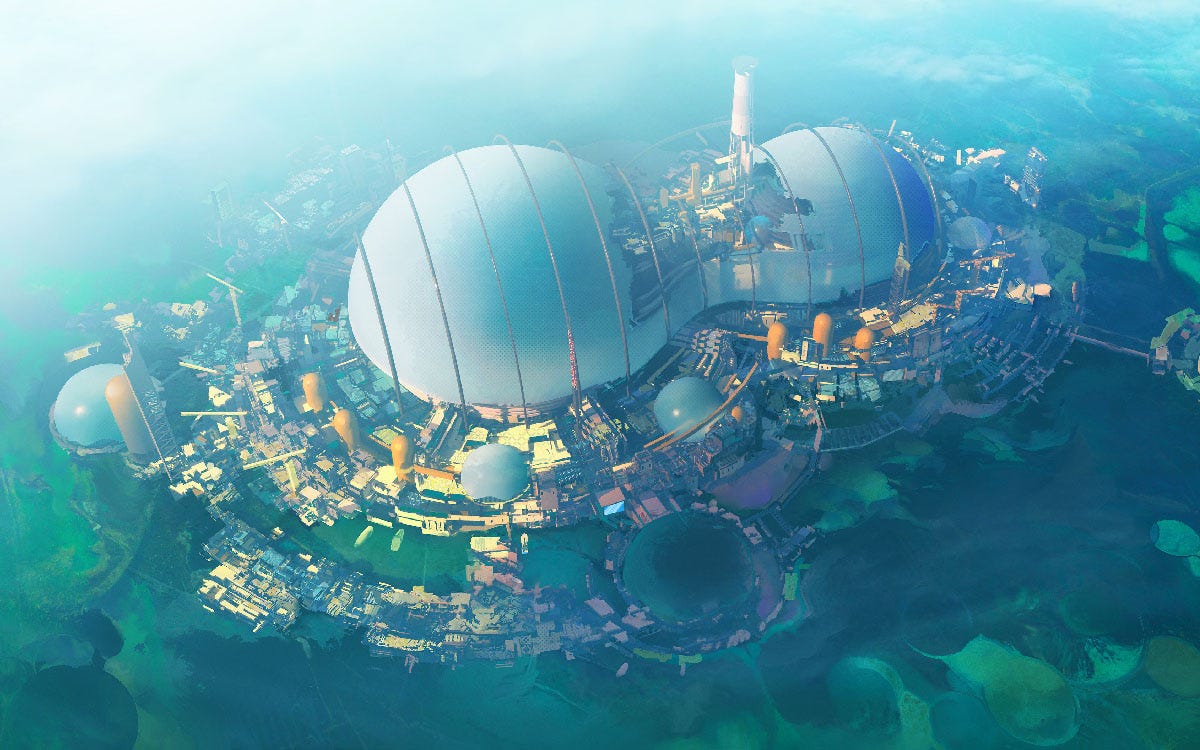
One of these proposals was the now infamous Technate of America, covering modern day United States, Canada, Central America, expanded south through Venezuela and its neighbors, and incorporated Greenland in the North. Yes, the very Greenland that the Trump administration suddenly became obsessed with annexing, and Venezuela in which they toppled the government in eyebrow-scratching ways.
So, this all sounds awfully familiar, doesn’t it? Maybe because once again, the world is at a difficult impasse and massive, painful changes to politics, culture, the economy, and global governance are pretty much inevitable. Just putting our heads down and focusing solely on trying to solve critical problems without the distraction of political agitprop sounds like a no-brainer. Hence, the ideas of technocracy are stirring once again, although this time they’re coming from the people worst qualified to run it.
why few good things are ever easy
Except when you do that, you lose your voice and the option to back out of a bad idea that nevertheless has enough buy-in to proceed. You can raise some noise, but there is no obligation for those in charge to listen to you. And if there’s no obligation to take your voice into account, there’s no need to consult with you in the first place and you are effectively reduced to a very small cog in a very large machine with little agency to speak of, and constantly subject to the latest edicts.
Sure, democracies are imperfect. They often move too slowly for comfort and are too easily undermined when societies which practice it are dragged into a low trust mode of operation, as we can see over the past two decades. But a democracy’s inability to move at breakneck speed is a feature, not a bug.
Authoritarianism of all types, including technocracies, sell themselves as parental and enlightened systems where speed and efficiency will translate directly into a material reward. In reality, they’re brittle. Because everything is held by a consensus at the top, if that consensus ever dissolves or is undermined, the whole system can fly apart if it doesn’t brutally crack down on its subjects at just the right time.
Democracy, on the other hand, slowly but surely establishes consent. Consensus is a bottom-up process rather than top-down, so the resulting system is far more stable and can absorb far worse shocks with far less damage. Bad ideas are stopped more easily and faster. Bad news and disagreement are expected, so less money and time gets sunk into bad projects. And more ideas see the light of day.
At the same time, democracy can’t survive by tradition alone. It needs constant care, updates, and new institutions to carry it forward. Just as a technocracy that picks the wrong people becomes a kakistocracy, a democracy in perpetual, obstinate gridlock becomes a failed state. But it’s easier to unjam gridlock in democracies where leaders come and go by popular choice — even, and especially, a bad one — than to untangle an authoritarian kakistocracy where you’re an NPC whose opinion is irrelevant.