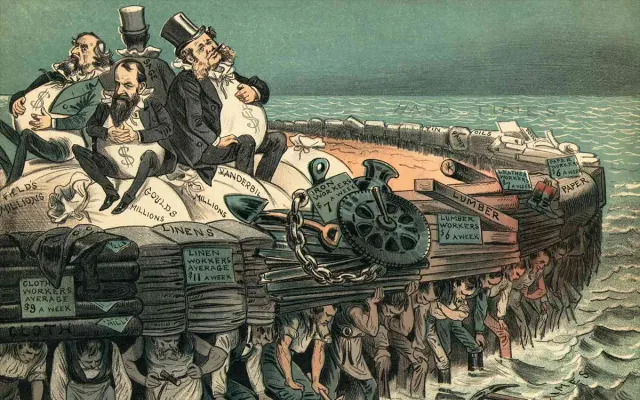
is minimalism the antidote to runaway industrialization?
Our factories crank out tsunamis of cheap consumer goods and online shopping is getting them around the world faster. But are we hitting a point of diminishing returns?


One of the expressions I've always heard growing up is something that may have an analog in your native language as well: "we are not so rich to afford cheap things." On the surface, it's a paradox. How can cheap things require you to have lots of money? But to those who study the effects and costs of poverty, it's a perfectly reasonable idea. Cheap things don't last. They will quickly break or degrade to the point where their usefulness is minimal and require you to buy a replacement. It's great for those tracking GDPs, but awful for your wallet. Looking at things as investments is a much better way to save money in the long run because an expensive table, or couch, or computer is going to last a lot longer than the cheap alternative.
Of course, all of this only works when you have the money to spare, which is why the current trend of minimalism as pitched by gurus like Marie Kondo is getting a lot of criticism from the pundits who actually asked people how they make ends meet. The nearly 8 in 10 Americans and 4 in 10 Canadians who live paycheck to paycheck would rather settle for the convenience of buying what they need online as cheaply as possible. Unfortunately, this also backfires since warehouse jobs today brutally wear down employees, and while they can create jobs in small towns that lost their main industries, those jobs mostly consist of moving stuff from boxes to other boxes and sending them on their way with very variable pay.
We keep ordering cheap stuff, it keeps breaking, we order replacements, and generate more and more traffic which is overwhelming cities that can't keep up with the volume of ever faster shipments, and because the companies trying to sell us as much cheap crap as possible focus on convenience and keeping their costs down, a lot of stuff we'd never think ends up in the trash if we return it, actually goes on to litter landfills. It's a vicious cycle in which the only way to be better to the environment and our wallets is to have more money to buy things made to last and the luxury to be patient until they get to us, and it's depressing to think about how badly our personal efforts to save money can backfire in every way possible.
But this is yet another reason to rethink how we define financial success on macro and micro levels. By urging people to invest in companies that produce durable products, revamping jobs to account for automation and paying people more to know things, rather than sit in offices, and start worrying about quality rather than quantity and growth no matter the cost, we can reverse many of these trends. The bottom line is that over the past century, we got really good at making things and focused on making as many things as possible for as many people as we could. Whether all those people really needed all those things was a secondary concern, and any slowdown in sales was met with just making something else instead.
In a way, the lack of wage growth adjusted for inflation helped prolong the industrial mindset because, as noted above, people had no choice to buy lots of cheap stuff quickly. But this isn't sustainable. Wages in the developing world which was able to keep prices down keep growing, automation keeps accelerating, and jobs are less secure than they have been in generations. At some point, we have to stop and reassess if careening from one crisis to another, avoiding it by the skin of our teeth, and putting off looming disasters is a good long-term trajectory. We may be too poor to afford minimalism today, but we're not wealthy enough to reject it completely.