so you think you want to be a scientist?
Scientifically illiterate politicians on the cultural warpath and their fans convinced millions that scientists lead a charmed life in ivory towers. Spoiler alert: they do not.


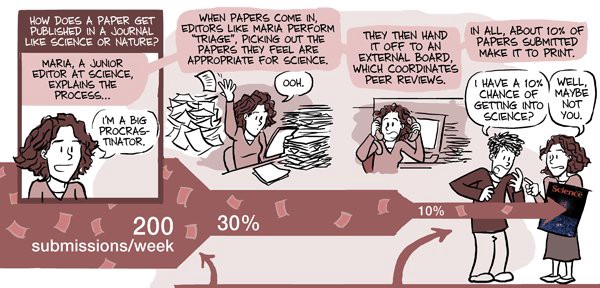
How many times have you heard scientists and professors described as living in ivory towers of their colleges in blissful ignorance of the real world, especially by those with a pronounced anti-intellectual streak? If you go by these descriptions, you might imagine academia as a fantasy land where all your expenses are magically paid off, there's an endless pool of grant money for your research, and whenever economies go into a tailspin resulting in surges of painful layoffs, you could go and hide in this wonderful, carefree realm. But today, when pretty much everyone can get on the web and vividly describe what things are really like in academe, this Ivory Tower professor stereotype seems as outdated as bell-bottoms and denim shirts. There's a lot more to being a scientist than choosing whether to publish your research in Nature or Science, and collecting grants…
When you're a grad student who rushes into the academic world hoping for a safety net from layoffs and high unemployment, the initial euphoria after being accepted quickly fades as you realize that your apartment and your bills aren't going to pay themselves just because you're back in college. Your stipend will be a fraction of how much you would be getting paid as an entry level professional, you're going to have research or maybe even teaching duties, and if you're going for a PhD, expect about five years of scraping by. But it'll all be worth it in the end when you become a professor, right? Sure it will. Only one slight problem. I'm sure you've noticed a significantly greater number of students than professors, even in grad school. If even half of all those students landed a professorship, there should be a lot more professors. But there aren't. After completing a PhD and a possible post-doc making about $35,000 a year on the high end (vs. up to $100,000 or more for R&D for a big corporation with a similar skill set and hands on experience), the chances of becoming a professor aren't very good since there are hundreds of applicants for each open position. If there is an open position.
While quite a few people in the United States love to brag about the nation's scientific prowess, they're usually not big on backing up their praise with actions. As a result, colleges often see their budgets cut at the very first sign of trouble, grants for cutting edge research quickly dry up, and fewer grad students and professors could be employed. And even if you become a professor, unless you get tenure, you'll be dismissed by the time you hit middle age and after spending several decades researching, studying and teaching, find yourself needing to change careers, very quickly. Today, you have a few rather appealing options, such as becoming a popular science blogger or editor (which is also no picnic, but at least there's room in the industry), writing books, and trying to apply your skills to corporate R&D, but these options tend to be for researchers working in computer science, biology, chemistry, physics, and medicine. Social scientists could apply their PhDs to marketing, but turnover among marketers is notoriously high, mainly because companies try to use them as salespeople, a job that marketing researchers, trained mostly in psychology, statistics and math, aren't coached to do.
Of course there is room at the top and even the most accomplished and tenured professors retire, or take the most promising students they see under their wing, giving newly minted scientists jobs at state of the art labs and access to a steady funding pipeline. And people should definitely try to see if they have a shot at being the new go-to experts on whatever topics they'd love to study for the rest of their lives. But the path to the top is very competitive and the going is very rough. Far from hiding in Ivory Towers awash with public funding and living in the luxury of big labs and tenure, most scientists are in the same pay range as a young professional hitting his stride, keenly aware of the financial challenges people in the real world face on a daily basis, and waiting for who will be gone when the next round of budget cuts hits. So much for academia being a safe haven…
[ illustration from PHD Comics: Science vs. Nature by Jorge Cham ]