# tech
To Ray Kurzweil and his adherents, the "exponential curve of technology" is an immutable law of nature. But does it actually exist in the real world?
# tech
Some engineers are convinced that neurons work the same way as circuits. Neuroscience begs to differ.
# evolution
British pundit Dennis Sewell is back to blame all the evils of the modern world on the discovery of gradual genetic change in living organisms.

# oddities
Have you ever wondered what your favorite cartoon characters look like without skin or organs? Well, here's your chance to find out...
# science
Scientists want to drill into a currently sleeping supervolcano to learn more about it. The payoff would be huge, but so are the risks.
# space
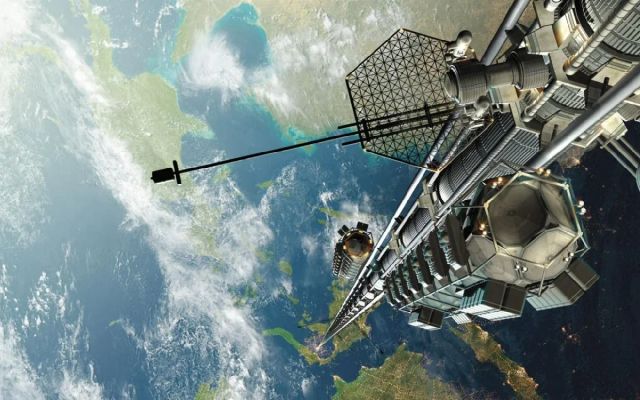
Space-based solar arrays promise to harness the raw power of the sun without atmospheric diffusion. But how do we get that power down from orbit?
# space
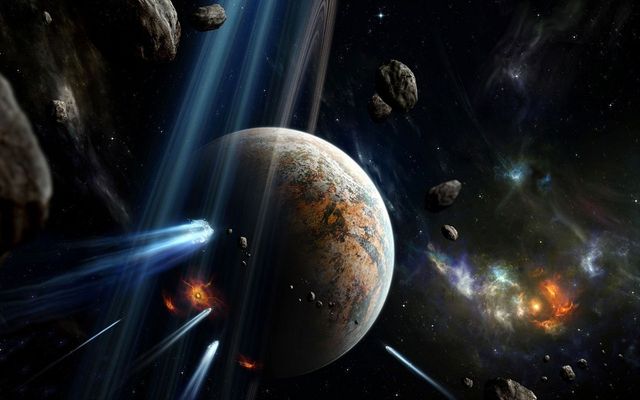
Far from destroying organic molecules, the conditions in deep space seems to foster their creation while protecting them from cosmic rays.
# astrobiology
Panspermia is a hypothesis of how life might have hitchhiked to Earth. It's not meant to explain how life actually began.

# tech
For Ray Kurzweil and his disciples, the "exponential curve of technological advancement" is the way, the light, and the cure for all that ails us...
# science
People hate dying in a cataclysm. But they also like the idea of living at the end of history as they know it.
# space
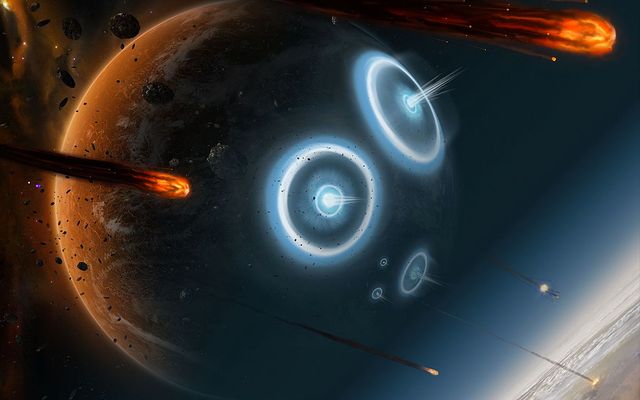
The future is often painted as a utopian landscape of amazing inventions and entertainment. The reality is often a lot messier and a lot of promises never come to pass.

# astrobiology
Was Darwin interested in panspermia, the hypothesis that life on Earth was seeded by asteroid impacts?

# health
Insurance companies could be forced to pay for faith healing and the Christian Science movement is ready to cash in.

# evolution
Dinesh D'Souza's exploration of evidence for the afterlife is a feat of intellectual laziness and incuriosity.

# science
A high IQ score might make you feel good, but it seems to have relatively few real world advantages.