could space planes help fight global warming?
Planes capable of suborbital flights reducing emissions from air travel sounds absurd at first glance, but a lot more plausible when you consider the technology they plan to use.


Illustration by Charles Bombardier
When climate activist Greta Thunberg sailed across the Atlantic to attend the UN Climate Action Summit in New York, she was following a new Nordic trend of avoiding air travel to lower one's individual greenhouse emissions. At first glance, it makes sense because jet fuel is highly refined kerosene, which isn't the most climate friendly substance in existence, and covering thousands of miles by burning thousands of gallons of it isn't exactly great for the atmosphere's long-term health. However, unless you're flying on a private jet, you're distributing those emissions across several hundred other passengers who'd otherwise use individual carbon-spewing cars or other forms of transit which primarily use fossil fuels to get to their destinations.
Overall, air travel is less than 2% of our greenhouse emissions and if we wanted to make a real difference in reducing how many pollutants we emit, tackling energy production agriculture, and heavy mining and manufacturing could keep more than half of all greenhouse gasses we're currently blenching out of our air. That said, demand for flying is surging and there is concern that more planes in the sky could become a serious environmental issue if airlines don't keep track of potential offsets and limiting shorter flights which are less fuel efficient due to how much fuel planes burn on takeoff and landing.
In other words, don't give up air travel just yet, but also don't fly when a relatively short road trip will be just as fast when you consider travel to and from the airport, security, and the wait time before boarding. There's even a popular idea that trips under 400 miles are probably just as fast if not faster by car than by plane in cases where a straightforward surface route exists, one tested by the Mythbusters with very interesting but not surprising results.
making planes cleaner with the sabre engine
Now, there might be a better way forward, especially as more and more airlines seem willing to jump into ultra-long-haul flights -- think routes like Sydney-London and New York-Singapore -- and wondering how they could reduce the 18 to 20-hour travel time. Enter aerospace company Reaction Engines, which wants to make Single Stage to Space, or SSTO, aircraft a reality with its planned SKYLON spaceplane. Normally, planes can't fly past a certain altitude because the air they need to produce thrust becomes too thin and they would have to transition to something a lot more like a rocket than a conventional jet. Reaction Engines wants to address this with a design called SABRE, combining a jet engine with a rocket.
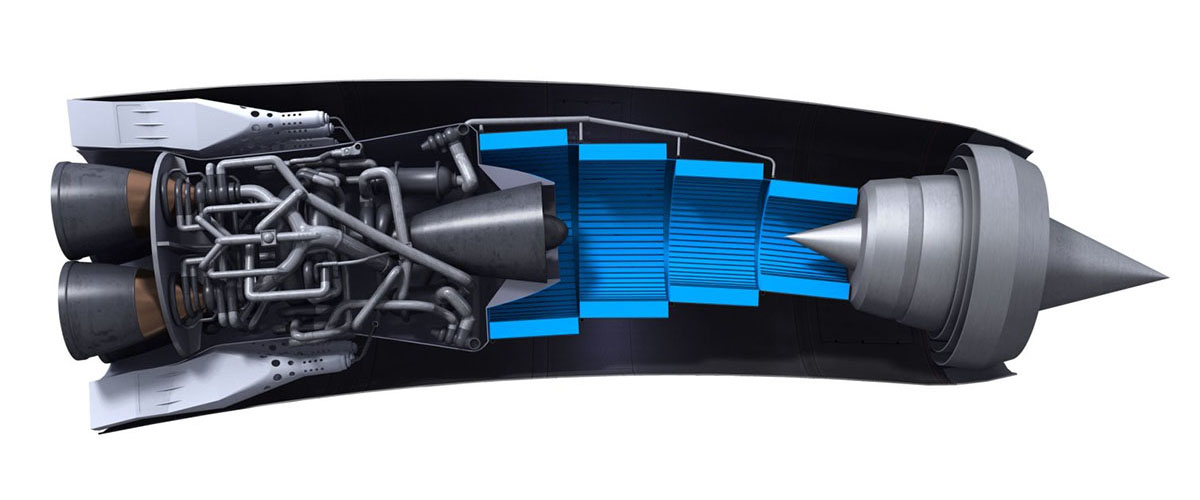
Their initial goal is to launch something roughly the size of an airliner into suborbital space to deploy satellites and carry passengers, then work out what SABRE configurations could put a vehicle carrying astronauts into orbit, but those capabilities could enable airlines to complete a flight that normally takes almost all day in just a few hours. But wait, you might say, wouldn't this pose the same problem as reusable rockets according to environmentalists? With so much fuel being used for takeoffs and landings, and flights being more frequent, the greenhouse gas contributions must be immense, right? They would be if SABRE used kerosene, but instead, it runs on a hybrid hydrogen-oxygen fuel that produces nothing but steam as a byproduct.
how can rocket planes be greener than modern jets?
Of course, water vapor also has greenhouse properties. Without it and carbon dioxide, our planet would be a snowball with an average temperature only slightly above freezing, but it also has a cyclical relationship with carbon dioxide. Greater artificial greenhouse gas emissions mean more water evaporating and remaining gaseous as the planet warms, amplifying the greenhouse effect instead of coming down as rain or fog. You can see a similar effect in contrails left by aircraft as the gases they emit interact with the atmosphere, forming ice crystals that trap heat from the sun and contribute even more to global warming than the planes themselves.
By using an engine like SABRE and its hybrid fuel mix, we wouldn't be emitting the impurities and hydrocarbons of today's jet engines and removing a critical part of the positive feedback loop. The vapor would simply dissipate and become part of the natural water cycle. If you're a passenger on one of these future ultra-long-haul flights, you'd be more or less floating on a cloud into suborbital space and get to see a black sky and the curvature of the Earth below you as you're hurtled towards your destination at hypersonic speeds. Meanwhile, the flights below you would use similar engines at a much lower throttle for shorter routes and emit far fewer pollutants into the atmosphere.
The future is certainly looking promising if Reaction Engines can really pull off its design given the proper funding and a deadline. So far, they've slowly but surely hit every milestone needed to show that the design has merit. They just need to bring it all together and perform the flight tests to validate that what's working in the lab will work just as well in the real world. And if they succeed, it will be a victory for air travel, space exploration, and the environment.