how high could the world's population go?
There is a hard limit to how many people this planet can support, but we may never actually reach it. If we do, we could be quickly cut down to size.


Neo-Tokyo from 1988's Akira
Today, there are more than 6.8 billion humans on our planet living in almost every corner of the world, making us one of the most successful species of macroscopic animals of all time. And we're still growing in number by approximately 1.15% every year, giving quite a few scientists and politicians good reasons to start worrying about the potential impact that a runaway population explosion will have on the environment, infrastructure, and energy demands around the world.
Since the vast majority of future growth will come from areas affected by poverty and with highly underdeveloped infrastructures, some are even saying that we need to put a freeze on advanced research projects until we can put nearly 80% of the species firmly on its feet. Others, myself included, advocate the exact opposite, that we need to boost global R&D to find new and better ways to build efficient, reliable power grids and critical infrastructure where it's needed most. And yet others are saying that we need to push into space in the next few decades or we'll run out of room on Earth.
But maybe, we shouldn't really be worried about global population growth. Maybe, this problem will solve itself by the end of the century and our real concern should be runaway consumption of wealthy nations? That's the question posed in a recent column for The Prospect by British science journalist Fred Pearce, and this idea is backed by sound facts from a demographic and statistical standpoint.
As noted in the first link, we might be reaching the limit of how much our species can expand and the rate of growth has been steadily slowing over the last few decades from its peak of 2.19% in 1963, something on which Pearce expands with his examples of falling birth rates across the world thanks to modern medicine and today's industrial lifestyle. With farming being treated as a corporate enterprise and higher survival rates for newborns, even in rural areas of nations still struggling with providing the basics, fewer and fewer kids have to be born to keep the family going. And that means longer lifespans for more people will eventually be offset by lower birth rates and the world population will eventually decline, reaching an equilibrium.
The immediate problem with that scenario is that fewer young workers will be supporting a disproportionately large number of senior citizens, presenting a massive economic burden on the developed nations facing this scenario. In the United States, the presented solution is to allow seniors to keep working, delaying retirement as long as possible to draw less money from their government benefits and making it easier on the younger generations. However, there's a problem with this approach because it limits the number of jobs available to those just trying to enter the workforce. Generation Y could well bear the brunt of this solution, putting up with a longer climb up the corporate ladder, more glass ceilings and depressed wages for decades.
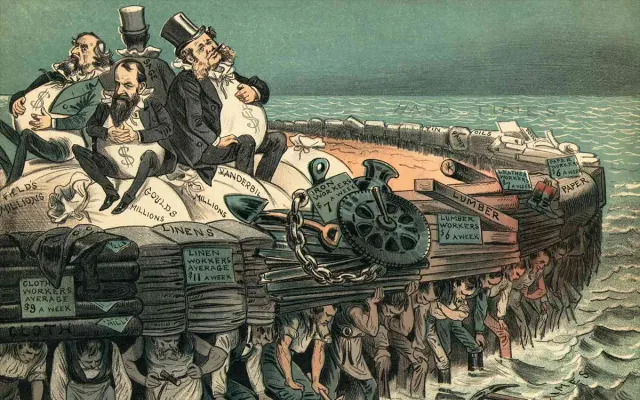
But as odd as this may seem, the dilemma of a population decline in the developed world illustrates the limits on how much our species can expand. There are only so many jobs, so many resources and so many places to live. One of these days we'll run out of all three, especially resources which are being rapidly consumed by the developed world. As wealthy nations throw away mountains of plastic, burn through fossil fuels, and pollute the planet to their hearts' content, they're making fewer of our finite natural resources available to billions.
Humans, like all living things, are subject to our biological and environmental limitations. And while we're still going to be around for the foreseeable future, evolving faster and faster as we reproduce, our numbers will eventually peak and level off. The advances of the past two centuries allowed for much better medicine, food, shelter, and necessary infrastructure which allowed for a population explosion. However, we're running out of both the capacity and the need to keep propagating with no limits. If we do, we'll end up with a population that we can no longer support and poverty, famine and disease will do their grim work and cull our numbers…