the great recession vs. game theory
Economic theory and reality keep colliding as the Great Recession unfolds, and Wall Street keeps pretending that the theory is winning.


Let's go back in time to March of last year. Stocks are in a freefall, the bailouts are streaming out by the billion, jobs are being cut left, right, center and sideways, and people are mad at Wall Street's greed and arrogance. Heated exchanges on the web and on TV found villains across government and industry, and while just about every ideologue found his or her favorite company or politician to blame, by far and away, the business world got the brunt of the fury. This is why the Daily Show's Jon Stewart delivered his now classic rant about CNBC, the business news network which claimed to have the access and expertise to keep you abreast of the what was really going on on the market but in reality, focused on Wall Street hype and corporate PR campaigns…
Fast forward more than nine months later. And things seem pretty much the same. Yes, the stock market isn't losing value like a deflated balloon every day and there have even been a few rebounds and rallies. But when it comes to the economy outside Wall Street, the unemployment rate is still hovering around 10%, though that number is staying relatively consistent because people are leaving the workforce outright, and if we were to account for all the underemployed, discouraged and unemployed workers who aren't entitled to collect some sort of unemployment, like independent consultants and freelancers, the real un- and underemployment rate has climbed to nearly 17.5%.
Wages have remained stagnant for the last two years for those who still have a steady job and pay raises are the worst in 33 years. Of course that's not an issue for Wall Street, which used the money loaned to it to make lucrative bets and is now giving out millions in bonuses to its employees. To take a cue from Rick Santelli's fifteen minutes of fame last year, who wants to subsidize the losers' mortgage when you can subsidize their salaries and refill their coffers instead?
While we could talk about the details of the TARP program and the moral implications of what's going on until the next stock market calamity, there's something else that we should note about the current state of affairs. If you recall, the idea of making money available at attractive terms to businesses who would then create more jobs and facilitate an economic recovery in a down market is a cornerstone of supply side economics. Yes, in a textbook sense, this is usually done with tax cuts and incentives but since the 1980s, helping businesses in hard times started incorporating bailouts.
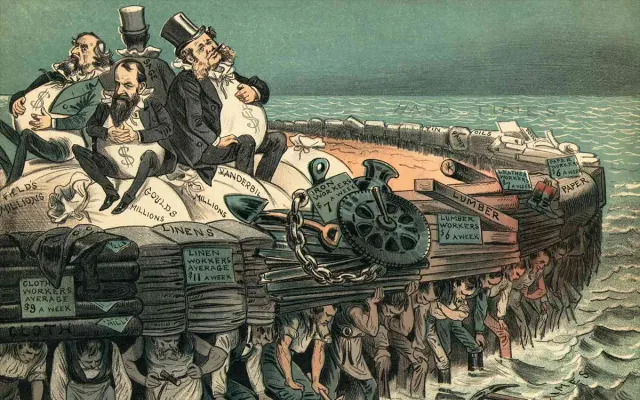
Relying on game theory, the strategy's proponents argue that when the affected businesses recover, they'll need to hire more and more people to restructure and keep going, and those people will go out, spend their hard earned paychecks and keep stimulating the economy. On paper, it works. In reality, even a cursory view of the broad economic statistics will show that all it does is increase the income disparity between middle class and the wealthy and save failed businesses from meeting their fate in the free market rather than use taxpayers as an insurance policy that always pays out.
But why isn't the strategy of injecting cash into the economy working? Well, it's actually pretty simple. People's decisions aren't always governed by far-sighted logic. Companies in big trouble will use their money to either pay down debts, streamline their operations (which ironically enough, often involves layoffs) and when hiring on the upswing, they can always outsource the work to save cash. The notion of the great benevolent market just doesn't work in the real world because companies are under no obligation to create jobs anywhere other than in the best hopes and wishes of those giving them tax cuts and bailouts.
This is why Wall Street used the money given to it to rejuvenate itself and the rest of the economy is still in the doldrums. What did the creators of the TARP program expect? Bankers knocking on doors bearing gifts and high paying jobs to those in need of employment in the wake of the recession? Was there was no way that anyone on Wall Street could've come up with a free market solution to the dilemmas at Bear Sterns and Lehman Brothers so the trillions handed to the financial sector might've been used for infrastructure upgrades and grants for R&D projects that would be able to really drive the economy and create jobs over the next decade without running up sky high deficits?