when nature isn't neat and tidy
It's actually a good thing there's a debate about whether to classify Pluto as a planet or something else.


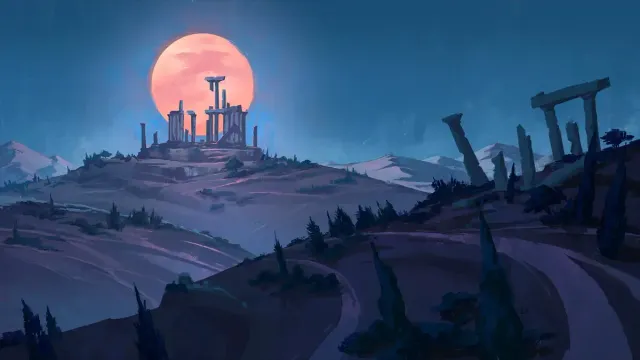
Illustration by Mathias Pedersen
Behold a sphere of rock and ice called Pluto. Once it carried the same designation as mighty Jupiter and the other gas giants and rocky worlds orbiting the Sun, but no longer. Instead it's now a dwarf planet, something like an overgrown asteroid without the heft to clear out its orbit in the Kupier Belt. No big deal, right? Scientists constantly find new information, debate and reclassify things.
So what if a little ball of rock and ice billions of miles away now has a different designation? Why does that have to make people's blood boil and elicit angry letters and complaints towards the astronomical body that saw it fit to update the categories under which the bodies in our solar system are filed? It's not like we're going to hurt Pluto's feelings by the demotion.
When I wrote about the planetary downgrade in July, it seemed to me that the backlash against the decision was rooted in an approach to science which focuses on memorization rather than conveys the flexibility of the scientific method. And it still does. People learned that Pluto was a planet because it was a sphere and it was orbiting the Sun, therefore, anyone who says otherwise must be wrong.
Some astronomers and amateurs are still trying to continue the debate, bitterly calling the International Astronomical Union irrelevant because the members made a decision with which they didn't agree. To put in perspective how outlandish statements like that are, imagine if a chemist called the IUPAC, the international custodians of the periodic table, to have lost their merit after they rejected her claim to a new element. Or a lawmaker rejecting the legitimacy of Congress as a legislative body after his pet bill was shot down in a vote.
Here's the important thing to keep in mind. Nature doesn't come in neat little packages for us to put in our tidy boxes and stamp a name on them. Space is vast, filled with mysteries and objects that straddle definitions. From orphan planets roaming the interstellar voids, to planets rising out of the collapse of a massive star rather than its birth, to brown dwarfs which are gas giants so massive, it's hard to tell if they're a failed star or an overzealous result of planetary formation, it's all out there.
If we take the scientific view of the universe, we will need to come to terms with the fact that no one built everything we see around us according to a blueprint that we could easily catalogue, call it a day and go our for a beer. Having to reclassify celestial objects based on new information is just a part of life and an integral part of crafting scientific theories. There's no need to get all worked up about it, especially when we're dealing with inanimate objects that couldn't care less.