too big to crash: chatbots could now tank the economy
The AI economy is here, but not in the way it's been advertised...


One of the best ways to know that you're probably about to hit an economic bubble is executives and investors constantly insisting that you're not in a bubble while just one very specific economic sector is exploding like there's no tomorrow. In 1999, that was the wild zoo of startups offering you the chance to do anything and everything online, no matter how trivial. In 2007, it was buying or renovating real estate. Now, in 2025, it seems that large language models like ChatGPT are taking this dubious honor.
This year alone, tech giants are spending $320 billion on data centers and AI models, almost a third more than last year. Facebook is throwing billions at AI researchers. And spending on technical infrastructure and AI just passed that of consumer spending in terms of its contribution to the GDP. Which is wild because consumer spending is the lifeblood of a modern economy as we know it, while chatbots are still bleeding red ink from a financial standpoint, spending on them powered by hopium and technobabble of tech tycoons who think they're about to ascend to digital godhood.
Consider that OpenAI calculates that it's going to bring in $12.7 billion this year, but to become profitable and account for all the data center buildouts and training cycles, it needs to bring in $125 billion per year. They're hoping this happens by 2029, but with the current rate of burn, we may be looking at nearly $1 trillion in outlays across the AI industry by then, with the stock market propped up by pre-subprime crash valuations for companies heavily invested in creating and maintaining chatbots while their would-be customers are asking where's the payoff for the billions they spent.
Clearly, this is not a sustainable trajectory and something has to give. The more we're trending towards a single industry massively distorting economic numbers, the harder the correction is going to be. Even worse, if the hit is bad enough, we may once again be talking about bailing out enormous conglomerates which took on absurd risks that did not pay off, yet now expecting taxpayers to pick up the tab yet again.
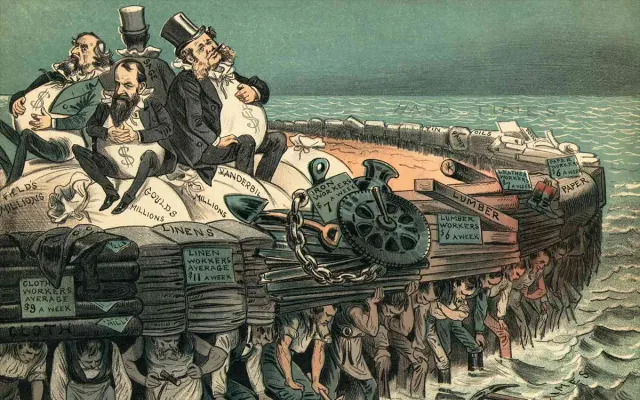
But it seems like the new strategy for American companies. Build complex and costly enterprises so large, so influential, so public-facing, and so over-leveraged that they can hold the entire economy hostage. Go ahead, invest your trillions. Worst case? We put a gun to the GDP's head and tell the government to pay up, and you'll make most of your money back, just like FIRRA during the Savings And Loan crisis in 1989, TARP and quantitative easing in 2008, and the PPP during COVID.
Throwing national economies worth of cash at training LLMs with wild abandon while at the same time marking million of workers for layoffs because of AI, so you should totally pay us to get some AI too, seems to follow a similar train of thought. If this bet for the implementation of the Technological Singularity fails, enough of the economy will be at risk for the government to have to do something to save them. Even if it's going to be over $40 trillion in debt at that point, and struggling to service it...